How to Stop Door Dashing with Polite Door Manners
Oct 23, 2026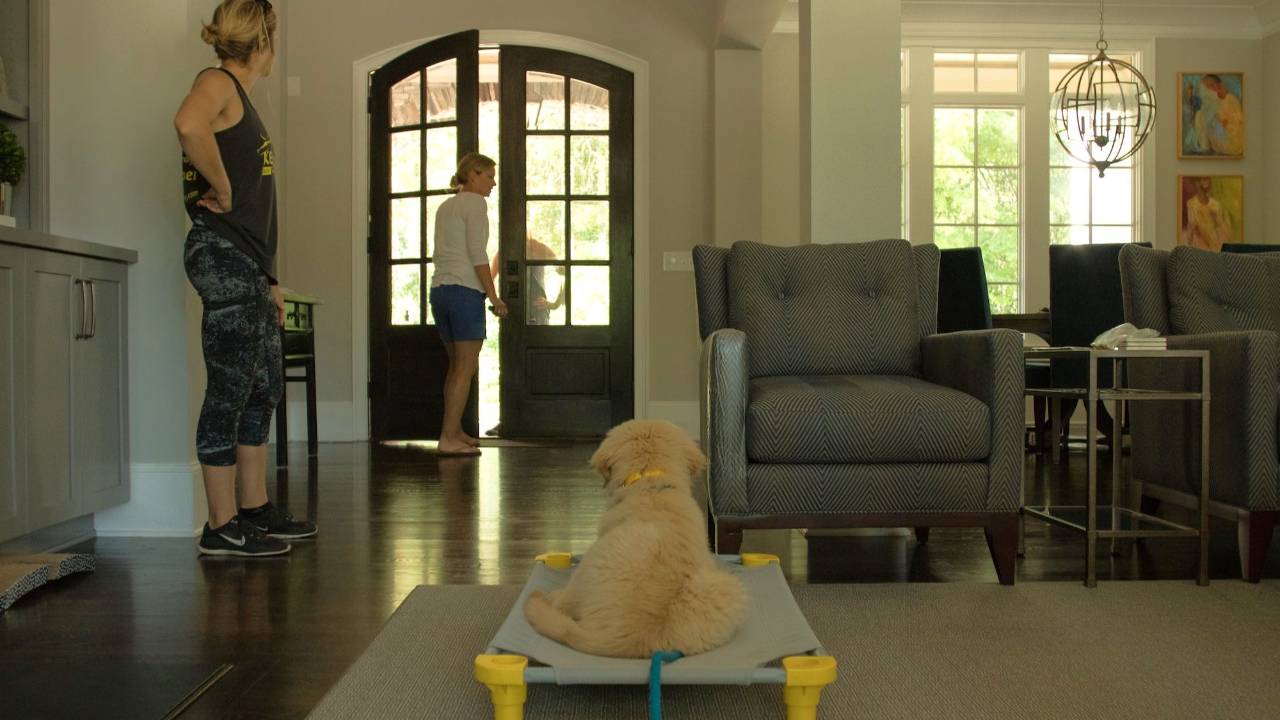
Does your dog make a break for it every time the front door opens? Body slam into guests as they come through the door? Try to squeeze their head through the doorway as soon as it's open just a crack?
Door dashing is an all too common problem. The anticipation of what lies on the other side of the door tends to get dogs amped up and their excitement can get the best of them.
At KeenDog we teach two main strategies for tackling door dashing that we refer to as "Door Manners." The first is utilizing the place command to send your dog away from the door when you need to open nit and the second is teaching an automatic sit or down stay at the door.
Let's explore how these two strategies help alleviate door dashing and ensure safety around thresholds.
Using the Place Command to Stop Door Dashing
What is the place command? It's a foundational command that teaches your dog to stay within the physical boundaries of a designated space. Unlike commands like sit and down which tell your dog how to move their body into a particular position, place teaches your dog where they need to be in space. For more information about the place command and how to teach it to your dog, check out this recent blog post.
Why is the place command useful for preventing door dashing? The place command gives you the ability to send your dog away from the door and have them stay in that designated location until you release them. This creates space between your dog and whomever or whatever is on the other side of the door. If your dog is fearful and prone to lashing out at strangers in fear, sending them to place will provide relief from sharing physical space with a perceived threat and help them feel more safe and secure. If they get overexcited when guests come over, sending them to place will help them downshift faster to a state of calmness (especially if you've chained together the place and down commands, and if you've cultivated calm behaviors on the place cot).
How to use the place command for door manners: Keep your place cot somewhere in sight of your doorway but at least an arms length or two away from your door. When someone comes to the door, tell your dog "place" and use your leash and/or e-collar as needed to guide them onto place. Go to the door and open it, but be prepared to close the door and turn pressure back on (with the leash and/or e-collar) if your dog breaks the place command to come to the door. When you're ready, release with a terminal marker (we use "Keen" for a direct food reward or "Free" for a non reward release). Recruiting a friend or neighbor to stop by and ring your doorbell is great practice, just make sure to warn them that you might have to open and close the door in their face a few times before your dog stays on place well enough for your to open the door and greet them. If you consistently practice send your dog to place when someone comes to the door, your dog will learn to run to place as soon as they hear the doorbell or someone knocking.
Using a Sit or Down Stay to Stop Door Dashing
How is a sit or down stay used to minimize door dashing? After learning an implied stay for the sit command one of the first practical applications we work on is an auto-sit stay at door frames. That's a lot of dog trainer speak, but in simple terms we teach dogs that they must pause and sit whenever they approach an exterior door of your home and wait to be release before passing through the door frame. Consistently enforcing pausing at doorframes in this way will cultivate a calm, clear mindset in a transition where dogs might otherwise lose their minds to excitement. Consistently approaching exterior thresholds this way also teaches your dog that an open door is never an invitation to immediately pass through. They must look to you and get permission to pass through doorways that lead outside of the home.
How to a sit or down stay to stop door dashing: The key to teaching door manners using a sit or down stay is having a leash on your dog during the early stages of training. Approach the door with your dog and ask them for a sit and apply gentle upwards leash pressure. When they move into position, release the pressure. If they pop up or move out of position before being released, say uh-uh and turn the pressure back on until they're back into position. If using an e-collar, you would apply stim in place of the leash pressure with the same timing. Practice opening the door just a crack and watching your dog's behavior. If they move out of position, close the door and reinitiate upwards leash pressure until they are back in position. Repetition is very important for teaching door manners so you should expect that you'll need to repeat these steps over and over opening and closing the door a bit at a time until your dog understand that breaking the sit stay will only ever result in the door being shut.
Once you’re ready to be done practicing or you've finished answering the door, release out with "free," a non-food reward release. Releasing your dog to cross over the threshold or even just giving them back their freedom in the house are both very rewarding so food rewards aren't needed.
If you want to encourage an auto-sit at door frames, phase out saying the command "sit" when approach the door. If you stop in front of the door and your dog does not automatically sit, apply light upwards leash pressure until they move into position. Continue repetitions like this creating longer pauses before initiating leash pressure so that your dog has an opportunity to try and complete the desired behavior before leash pressure turns on.
If you don't want to teach an auto-sit or if you are unable to consistently enforce one, you can also just command your dog to sit or down near your doorway before opening the door and then release them out once you've closed the door or your dog has calmed down enough to be released.
Polite door manners are a life skill that every dog can benefit from. If you still aren't sure where to start or want hands on help, schedule a free consultation with our Charlotte-area trainers today!
ABOUT THE AUTHORS