The “Place” Command: What It Is & How To Teach It
Aug 28, 2026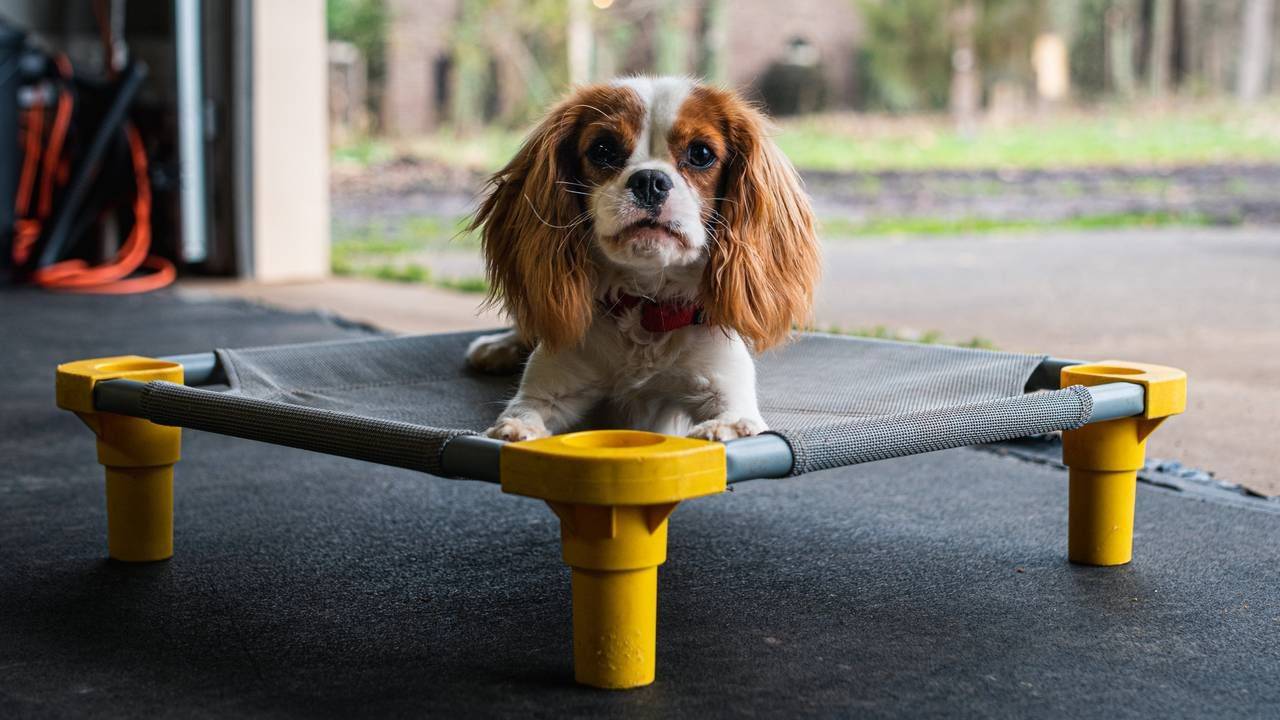
Most every dog owner knows of the sit and down commands and their importance as foundational behaviors, but the place command is not necessarily part of the standard vernacular. Or maybe you've heard of the command, but you're not sure how to teach place to your dog. The place command is a simple concept once you understand it, and one that will be extremely useful throughout your dog's life. Read on as we break down the place command for dogs and how to teach it through both luring and shaping!
What is the Place Command?
The place command teaches your dog to stay within the physical boundaries of a designated space. Unlike commands like sit and down which tell your dog how to move their body into a particular position, place teaches your dog where they need to be in space. The ability to send your dog to a particular location and have them stay there until released is incredibly useful for in-home management, cultivating calm behaviors, and building independence.
When you chain together the place and down commands, you'll have the ability to send your dog to a safe spot and relax - perhaps the single most useful behavior in developing a calm, independent, well balanced dog. We'll go into this in more detail below!
The Importance of Using a Raised Place Cot & Where to Buy One
The place command can be taught using any surface that has a physical boundary - like a rug, towel, or bed - but we find using a raised surface like a cot is best for the initial teaching process. Hind end awareness is a skill that must be developed in dogs, and rarely do dogs have excellent awareness of what their back paws are doing in the early stages of training.
If you teach the place command using a flat surface like a rug, it will essentially blend in with whatever is beyond that perimeter. If a dog's back paws step outside of the perimeter, they likely won't be able to tell and correct their position.
If dogs learn the place command on a raised cot, the difference in height will allow them to more easily feel if they've stepped off the platform and then they will step back on.
Additionally, once a dog knows to lay down as part of the place command, a raised cot will ensure that they don't slowly creep outside of the designated place perimeter as dogs are prone to do when they get comfortable and sprawl out.
Our favorite place cots are from 4legs4pets. We find their 40"x22" cots to be a good fit for the majority of dogs, though they offer a wide variety of sizes.
Other popular brands are Coolaroo and Kuranda, and wooden raised beds can also be a great (though more expensive) option if you're concerned with the aesthetics of your living space.
Teaching the Place Command Through Luring
Luring is a method of training that taps into a dog's natural predatory instincts of chasing prey. When luring your dog you want to hold your food reward between your thumb and pointer/middle finger so that they can chase the food without chomping at your fingers.
When luring your dog, it is important to keep your hand close to your dog’s mouth, think magnet to magnet. Many owners make the mistake when luring their dog to hold the lure a foot or more away and the dog loses the power of the lure at this distance, some dogs will just sit there, not understanding the concept of following the food.
When first training behaviors with luring, we recommend releasing out of the behavior immediately with your terminal marker to build excitement, enthusiasm, and engagement. When your dog begins to have a solid understanding of the behavior you are working on, you can begin to reward in position and build duration.
Whether or not you should name the behavior (say the command) before luring your dog into positions typically depends on how likely they are to complete the behavior. If you're just starting luring or your dog isn't particularly food motivated, wait to name behaviors until your dog is following the lure well and completing the behavior you are looking for consistently. If your dog is familiar with luring and is motivated to follow the lure to completion, you can begin naming the behavior right away. For example, you would say the command “place”, pause, then use your food lure to lead your dog onto the place cot, then release out with your terminal marker.
To teach the place command using luring, follow these 3 steps:
- Start with your dog sitting or standing on one end of the cot. If naming the command, begin by saying the command "Place." If not, simply bring your hand with food right in front of your dog's nose.
- Slowly lure them onto the cot ensuring you don't move your hand too quickly and disconnect the "magnetic" connection of your hand with their nose.
- When all four paws are on the cot, mark/release with your terminal marker (we use a double click or "Keen"), move (take a step away from the cot to visualize for them that they can now step off), and reward.
We typically teach the place command by having a dog start on the short end of the cot and walk lengthwise across it as this will give them ample space to stand with all four paws on the cot at the same time, but dogs who are nervous or hesitant may do better moving widthwise across the cot to start with since it's a shorter distance.
If your dog won't walk across the width of the cot, focus instead on building a positive associate with the cot. Let them explore it at their own pace, give it a thorough sniff, sprinkle food on it for them to eat as they explore, etc.
Sometimes moving across the cot at speed can be helpful as well. Back up a few steps and approach the cot at a light jog, using a leash to ensure your dog jogs along with you. For a toy motivated dog, tossing a toy across the cot may encourage a dog to jog or jump across and retrieve the toy.
Finally, a bit of leash pressure in combination with a lure can be useful in encouraging dogs who aren't particularly motivated. Place your body on the opposite side of the cot, offer the lure, and apply gentle but consistent pressure with the leash. When your dog steps onto the cot, immediately release the pressure to show them that pressure turns off when they complete the desired behavior. This can be stressful for a dog if they don't understand the give and take of pressure, so make sure to keep sessions like this very brief and positive, and keep your expectations low.
If a dog tries to step off the cot before you have a chance to release them, use spatial pressure (aka your physical presence), to keep them in place. Use your body as a wall and lure them straight across the cot towards you. Because you're in the way, they won't be able to walk straight across and off the cot. When you release them, take a step back clearing the path for them and making it clear that they can now step off.
When giving these commands, try to say the command only once then use your food lure to follow through versus repeating yourself (saying the word over and over can dilute and devalue the command).
Teaching the Place Command Through Shaping
While luring gives a dog all of the information they need to complete a desired behavior, shaping gives a dog no direction and instead rewards them for experimentation and reinforces successive approximations of a desired behavior until the target behavior is achieved. Shaping is essentially a game of hot and cold - dogs are encouraged to interact with their environment and offer up behaviors and the trainer rewards as the dog gets closer and closer to the desired behavior.
To teach the place command using shaping, follow these steps:
- Start by clearly defining the behavior you want to teach. In the case of the place the command, the desired behavior would be standing with all four paws on the place cot, or if you want straight to shaping a down on the place cot then the desired behavior would be all four paws on the place cot and in the down position.
-
Standing near, but not directly next to the place cot, and cue the session by telling your dog "Try something!" It is important to remain still and neutral while shaping as your dog will look to you for physical clues and body language, especially if most of their training has been done through luring. The goal is for them to start offering up behaviors on their own and this may take some getting used to for your dog.
-
Watch your dog closely for any behavior that resembles the target behavior, no matter how slight. If they take a step toward the place cot, mark (we use a double click or "Keen") and reward. If they take another step closer, mark and reward. If they take a step onto the place cot, mark and reward, etc.
- Gradually raise the criteria for a reward as your dog begins to understand what you're looking for. At the beginning of the session, a step towards the place cot may be enough to get a reward, but the expectation should increase as your dog gets closer and closer to actually completing the desired behavior.
It is important to keep an eye on your dog's attitude during shaping sessions. It is easy for dogs to become frustrated quickly, especially if they have not done much shaping. You may have to take a "two steps forward, one step back" approach at times. If they seem to not be progressing to the next step (i.e. actually putting their paw onto the place cot versus just standing near it), and they haven't gotten a reward in multiple tries, lower your expectations for a few reps to get their attitude back up.
When shaping, we do not name behaviors until the dog is performing them consistently. In the context of shaping the place command, wait to add the command until your dog is consistently running and jumping onto the place cot. When that happens, begin to slot the command in just before your dog does the behavior. So you would say "Place" aloud while they are running to the place cot.
At the end of your session, make sure to tell your dog, "All Done!" so they know the opportunity for being rewarded for experimentation has now closed.
Chaining Together the Place and Down Commands
While the place command alone is useful, the real magic happens when you chain together the place and down commands so that your dog automatically lays down as soon as they go to place. By teaching your dog to lay down on place versus just keeping all four paws within the boundary, you are conditioning them to shift gears into a calm state of mind anytime they are sent to place.
Chaining the place and down commands together is a simple process. If teaching the behavior through luring, lure you dog onto the place cot and then into the down position before you mark and reward.
If shaping, progressively reward until your dog is repeatedly going to the cot and standing with all four paws on it. Once they understand that the desired behavior requires them to be on the place cot, stop rewarding for this behavior and wait for them to become frustrated and try something else. Give them some time to process and mark/reward if they choose to lay down on the cot.
If your dog already knows the place command, but they don't know that they need to lay down, tell them the command then without saying anything else then lure them into the down, only once they've laid down then you can mark and reward.
You can also tell your dog both commands ("Place" then "down") in sequence repeatedly and eventually stop saying the down command and they will likely lay down because the pattern is engrained. This is a bit of a gray area for enforcement, though, because technically if your dog pops back up into a stand then they're not in the wrong. In this case, they offered the down but they were not commanded into this position.
Combining the two behaviors under the single command, "place," sets clear parameters for your dog - in order to get a reward, you must go to the place cot, climb on, lay down, and remain until released.
Adding Duration to the Place Command
When building duration, we use the marker "Good" to let dogs know that we like what they're doing and to keep doing it. At first you may only have your dog stay on the place cot for a second or two, telling them "Good" and delivering a reward in position before marking and releasing them off of the cot and rewarding.
Once you begin extending duration and adding distance into the behavior, you can repeat the marker "good," going back and rewarding your dog in position before releasing them out with your terminal marker and rewarding, of you can release them using "free," a non-reward release (freedom is the reward).
Using the Place Command in Your Home
Place is an extremely useful behavior for in home management because it not only tells dogs where to be, but it also cultivates calmness.
Here are some ideas for practical application:
- Send your dog to place when guests come over. Wait for them to settle before releasing them off to encourage calm greetings.
- Have your dog stay on place during family meals. Release them only once the meal is over.
- Young kids in the home? Send your dog to place if children are playing nearby so that they have a safe, child-free zone to relax.
- Practice separation by sending your dog to place at times when they would normally want to be right next to you such as when you're watching tv or working at your desk. Practicing this in small intervals will help prevent or reduce separation anxiety.
What about puppies who lack the self control to stay on place? Try tethering! Secure a leash to an immovable option such as a heavy piece of furniture and put the place cot right in front of it. Use the leash to tether your puppy on the place cot. There should be enough slack in the leash for your puppy to comfortably change positions but not so much that they can leave the cot. Start with short sessions and give your puppy a long lasting chew to occupy them while they stay on place. Remember that tethering should always be done with supervision.
Using the Place Command Out and About
While bringing a place cot out and about may feel cumbersome, the pay off can be significant in terms of safety, peace of mind, and your dog's comfort.
Planning to meet up with friends at a brewery and bring your dog along? Pack a place cot (or travel dog bed) for them to relax on next to you or under the table.
Have two dogs that you want to train together at the park? Have them take turns staying on place while you work with each individually.
Need a safe spot for your dog while you pitch a tent or set up a picnic lunch? Set your place cot in a shady spot close by and rest assured that your dog is comfortable and out of the way.
Bringing a cot or bed along may be a small hassle, but its a big investment in living life optimally with your dog!
Want hands on help incorporating the place command into your dog's training? Schedule a free virtual consultation with our Charlotte, NC dog trainers today!
ABOUT THE AUTHORS