7 Not-So-Obvious Mistakes Dog Owners Make
Dec 30, 2025
Even experienced dog owners can make subtle mistakes that create unwanted behaviors, stress, and frustration. At KeenDog, we focus on clarity, providing proper genetic outlets, and purposeful training to help dogs thrive while strengthening the owner-dog relationship. Here are some common, often overlooked mistakes and how to avoid them.
Mistake 1: Thinking “My Dog Already Knows This.” Just because your dog knows a command doesn’t mean they can perform it reliably in real-world situations. True mastery includes generalization (can your dog sit calmly in a crowded park, not just the living room?), stress-proofing (will they stay in place during the holiday rush or in public under high distraction?), distraction-proofing (can they focus when other dogs, toys, or noises compete for attention?), and enthusiasm (are they motivated to respond or simply complying?). At KeenDog, we emphasize that repeated, structured exercises - done in a fun and engaging way - reinforce behaviors, build confidence, and make commands second nature. Commands are not just skills; they are the foundation for communication, safety, freedom, and trust.
Mistake 2: Letting Freedom Outpace Skills. Many dogs are granted too much freedom too soon, such as open access to the house, off-leash time in highly distracting environments, or unstructured social interactions without the proper foundation. When skills lag behind freedom, chaos, stress, and unwanted behaviors often follow. Freedom is earned, not given freely. We teach dogs through structure first and privileges second, with management playing a crucial role in consistency, follow-through, and safety. Dogs who earn privileges gradually are calmer, more confident, and more reliable in every environment.
Mistake 3: Training Only in Calm Environments. If your dog only listens in a quiet living room, the behavior isn’t real-world ready. Dogs must be trained where life actually happens - at busy parks with other dogs, around kids, guests, and delivery workers, during high-traffic walking times, and amid household distractions like vacuuming, cooking, or active family time. At KeenDog, we gradually add pressure and distractions while keeping cues and expectations consistent. This process creates dogs who are confident, calm, and reliable anywhere. For example, recall practice starts in the house, moves to the backyard, and then to the park, with each step adding controlled challenges.
Mistake 4: Ignoring Mental Stimulation. A dog with insufficient mental engagement often redirects energy into destructive behaviors such as chewing, barking, digging, jumping, guarding, excessive licking, or pacing. Mental stimulation paired with physical stimulation creates calm, confident dogs. Daily activities like nosework and scent games, teaching new behaviors or tricks, structured retrieval or tug games that reinforce impulse control, and commands with duration under gradually increasing distractions can make a significant difference. Even five to ten minutes of structured play or scent work per day goes a long way, as mentally engaged dogs are happier, more focused, and more responsive.
Mistake 5: Inconsistent Communication. Consistency is key: one cue, one meaning, every time. Mixed signals are the number one cause of confusion and behavioral issues, not disobedience. At KeenDog, we teach clear and predictable communication through standardized verbal cues, consistent boundaries and routines, and clear expectations for when play begins and ends. For example, if “no” is used frequently but never followed through by actually stopping the behavior, it will hold no meaning for the dog. Clear communication prevents anxiety and builds confidence.
Mistake 6: Underestimating the Power of Repetition. Repetition isn’t boring, it’s essential. Each repetition builds muscle memory, emotional stability in high-stress situations, impulse control, and confidence. Daily repetitions don’t have to be long; short, structured sessions throughout the day are far more effective than occasional long sessions. Simple examples include five-minute recall drills, short leash walks with attention cues, or brief tug games with rules that reinforce control and motivation.
Mistake 7: Not Ensuring Genetic Drives Are Being Met. Many behaviors labeled as “misbehavior” are actually the result of unmet genetic drives. Dogs were bred for specific purposes, and when those needs aren’t fulfilled, frustration and unwanted behaviors often surface. A fulfilled dog is a balanced dog. When genetic drives are appropriately met through structured outlets, dogs naturally become calmer, more focused, and easier to live with.
Even the most dedicated dog owners make mistakes, and that’s okay! Training isn’t about perfection; it’s about awareness, intention, and growth. When we slow down, provide clarity, meet our dogs’ genetic and mental needs, and lead with consistency, everything begins to shift. Small changes practiced daily create big transformations over time. With the right structure, purposeful outlets, and clear communication, dogs don’t just behave better, they feel better. And when dogs feel balanced and understood, the relationship becomes calmer, deeper, and more joyful for everyone involved.
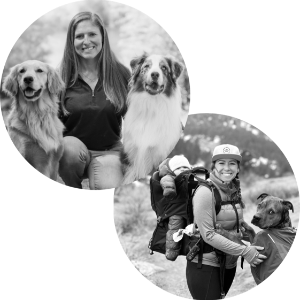
ABOUT THE AUTHORS