How to Stop a Dog From Jumping on People
Sep 04, 2026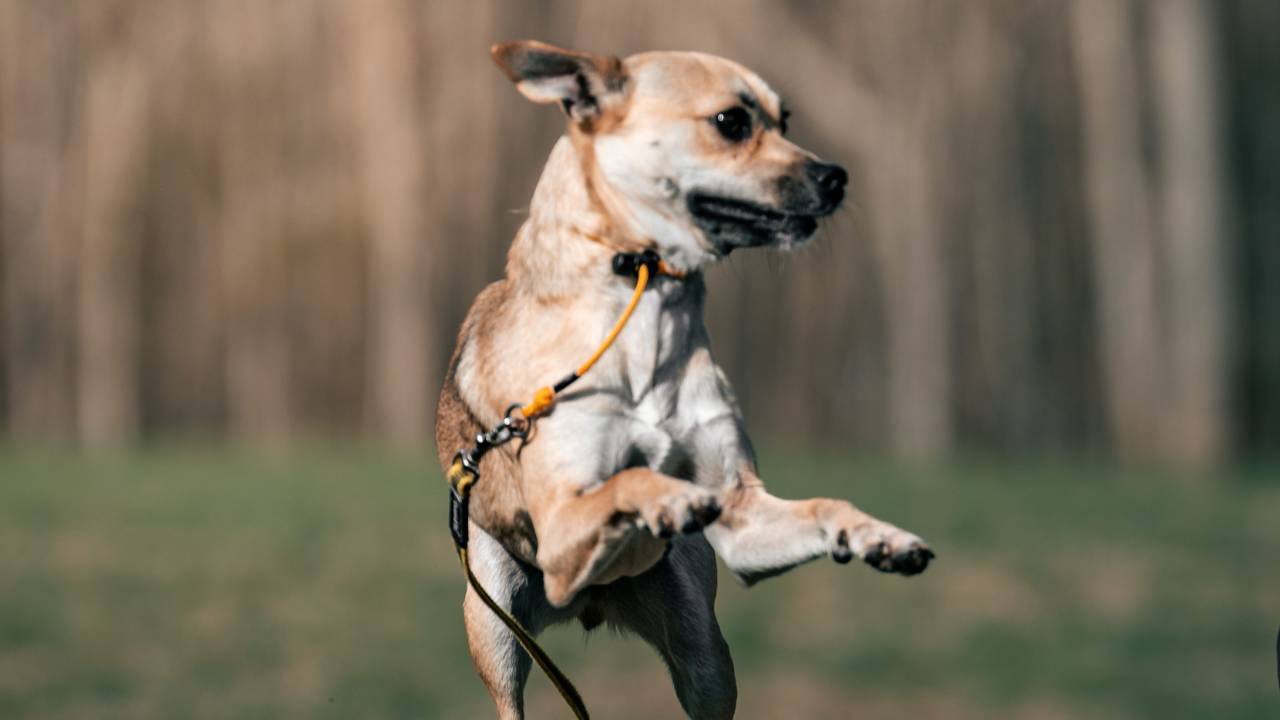
Few things are more frustrating (or embarrassing) than a dog who greets everyone by jumping all over them.
Whether your dog jumps on you when you walk through the door, launches at visitors, or tries to put their paws on every person you pass on a walk, the good news is that jumping is a behavior that can be changed.
Teaching a dog to stop jumping isn't simply a matter of telling them to "sit" every time their feet leave the ground, though. In fact, if you handle the situation incorrectly, you can accidentally teach your dog that jumping is part of the greeting routine.
The key is to combine management, clear communication, an alternative behavior, and consistency.
Why Does My Dog Jump on People?
Jumping is often a combination of excitement, attention-seeking, and a lack of impulse control.
Dogs quickly learn patterns. If jumping gets them attention, even negative attention, they may continue doing it. And because people often instinctively talk to, touch, push away, or even pet a jumping dog, the behavior can become surprisingly rewarding.
This is especially common with puppies. Puppies will jump up because they're excited and then inevitably someone will reach down to pet them. Through these experiences, puppies learn that jumping makes people interact with me. Over time, puppies can grow into 60-pound dogs who still believe jumping is an appropriate way to say hello.
Excitement itself can also become part of the problem. If every greeting is a huge event, whether you're coming home, leaving the house, meeting someone on a walk, or greeting guests, your dog gets repeated practice becoming overly aroused.
And the more often a dog rehearses a behavior, the stronger that behavior can become.
Start With Management
Before you can teach your dog what to do in place of jumping, you need to prevent them from continually practicing the behavior.
One of the simplest tools for this is a leash.
Keeping a leash on your dog during training gives you a way to control the outcome without grabbing, chasing, or physically wrestling your dog away from someone.
For example, if your dog starts to jump, you can:
- Step on the leash so your dog cannot reach the person.
- Use the leash as a communication tool to interrupt the behavior.
- Tether your dog to a secure location when appropriate.
- Use a leash when guests arrive so your dog can practice calm behavior instead of immediately rehearsing jumping.
The goal isn't to constantly hold your dog back. In fact, holding your dog tightly on the leash while someone approaches can actually make the problem worse. A dog who is already excited may become even more frustrated when restrained. The same can happen when you hold a dog back by the collar.
Instead, think of the leash as a way to manage the environment and communicate clearly, not as a way to physically restrain your dog through every interaction. Management gives your dog fewer opportunities to make the wrong choice while you teach them what you actually want.
Teach an Alternative to Jumping
Telling your dog what not to do isn't enough. If jumping isn't allowed, your dog needs to understand what behavior is appropriate. For many dogs, that means teaching a calm all four paws on the ground for greetings.
Many owners want to teach a sit/stay, however this can be quite challenging for a dog who is overly aroused already.
If your dog jumps on you and you immediately say, "Sit," then reward the sit, you may accidentally create a predictable chain: Jump → Sit → Reward. Your dog may eventually learn that jumping is simply the first step in the sequence.
Instead, restart the interaction. Take a few steps away. Let your dog come back down to an appropriate level of excitement. Then pet your dog before they jump or this is when you can ask for the sit before the greeting or interaction happens.
Practice Calm Greetings
One of the biggest mistakes we see is expecting a dog to remain calm during greetings when they've never actually practiced doing so.
Think about all the opportunities your dog has to rehearse over-excitement:
You come home ->
Your dog explodes with excitement and immediately gets attention.
You leave the house ->
Your dog becomes frantic because departures are a huge event.
A guest arrives ->
The doorbell rings, your dog races to the door, and everyone gets excited.
You meet someone on a walk ->
Your dog sees a person, pulls toward them, and eventually gets to say hello.
Every one of these interactions reinforces the idea that people = maximum excitement.
Instead, work on making people and other dogs just another stimuli in the environment. Your walks should be walks for the two of you, not a social interaction with everyone you see. Your dog doesn't need to ignore everyone forever; they simply need to learn that meeting people doesn't mean losing control. Once they are at a stage where they remain calm around other dogs and people, you can reintroduce greetings periodically.
The same principle applies to coming home - you can acknowledge your dog without turning your arrival into the most exciting five minutes of their day.
What About Guests Coming Over?
If your dog isn't ready to hold a place command while guests enter the house, don't set them up to fail. Management is your friend.
You can tether your dog, keep them on leash, or use another appropriate form of separation while guests come in. Once the initial excitement has passed, you can begin working on appropriate greetings.
Eventually, your goal may be for your dog to hold a place command while people enter, wait for permission to greet, and approach calmly.
But you don't have to jump from "my dog tackles everyone at the door" to "my dog calmly holds place for ten minutes while six guests walk in." Build the behavior gradually.
Ignoring Jumping Alone Usually Isn't Enough
You may have heard that the best way to stop jumping is to simply ignore your dog. Ignoring can be part of the solution, but ignoring the behavior alone typically isn't enough.
Your dog still needs to understand:
- What behavior isn't appropriate.
- What behavior you want instead.
- What happens when they make the wrong choice.
- What happens when they make the right choice.
This is where management, communication and an appropriate correction become so important.
If your dog is repeatedly jumping on people, simply turning your back while they continue jumping, barking, pawing, and rehearsing the behavior won't teach much.
Instead, prevent the dog from reaching the person, interrupt the behavior appropriately, and then give them an opportunity to perform the alternative behavior.
Consistency Matters
Dogs learn patterns quickly, which means consistency matters from everyone interacting with your dog.
If you don't allow your dog to jump on you but your neighbor immediately pets them when they jump, your dog is still receiving reinforcement for the behavior.
If you ask for a sit before every greeting but occasionally allow your dog to launch at someone's chest because they're "just really excited," you're creating a confusing rule.
The more consistent you can be, the faster your dog will understand the new pattern. Jumping doesn't get access to people. Calm behavior does.
Correct the Behavior After You've Created the Right Structure
Once appropriate management is in place and your dog understands the expected behavior, there can also be an appropriate consequence for jumping.
The important part is the order.
Don't rely on punishment as your entire training strategy while allowing the dog to repeatedly rehearse jumping.
First:
Manage the environment.
Then:
Teach the alternative behavior.
Then:
Prevent reinforcement of the jumping.
And when necessary:
Add an appropriate consequence for the unwanted behavior.
This gives your dog a clear picture of what is expected rather than simply telling them what they're doing wrong.
Manage the behavior. Prevent the rehearsal. Teach your dog what to do instead. Keep greetings calm. Reinforce the behavior you want. And be consistent.
With enough repetition, your dog can learn that being calm and keeping four paws on the floor is the behavior that gets them what they want: attention, access to people, and the opportunity to say hello.
Have you tried these tactics and your dog continues to jump? We would love to help! Check out our training programs for dog training in Charlotte, NC and the greater Charlotte area and if you live outside of the area check out our online courses! No matter your dog's age, breed, or temperament, we can help you live an optimal life together
ABOUT THE AUTHORS