Dog Anxiety in the Car: Why It Happens and How to Help Your Dog Enjoy the Ride
Jul 03, 2026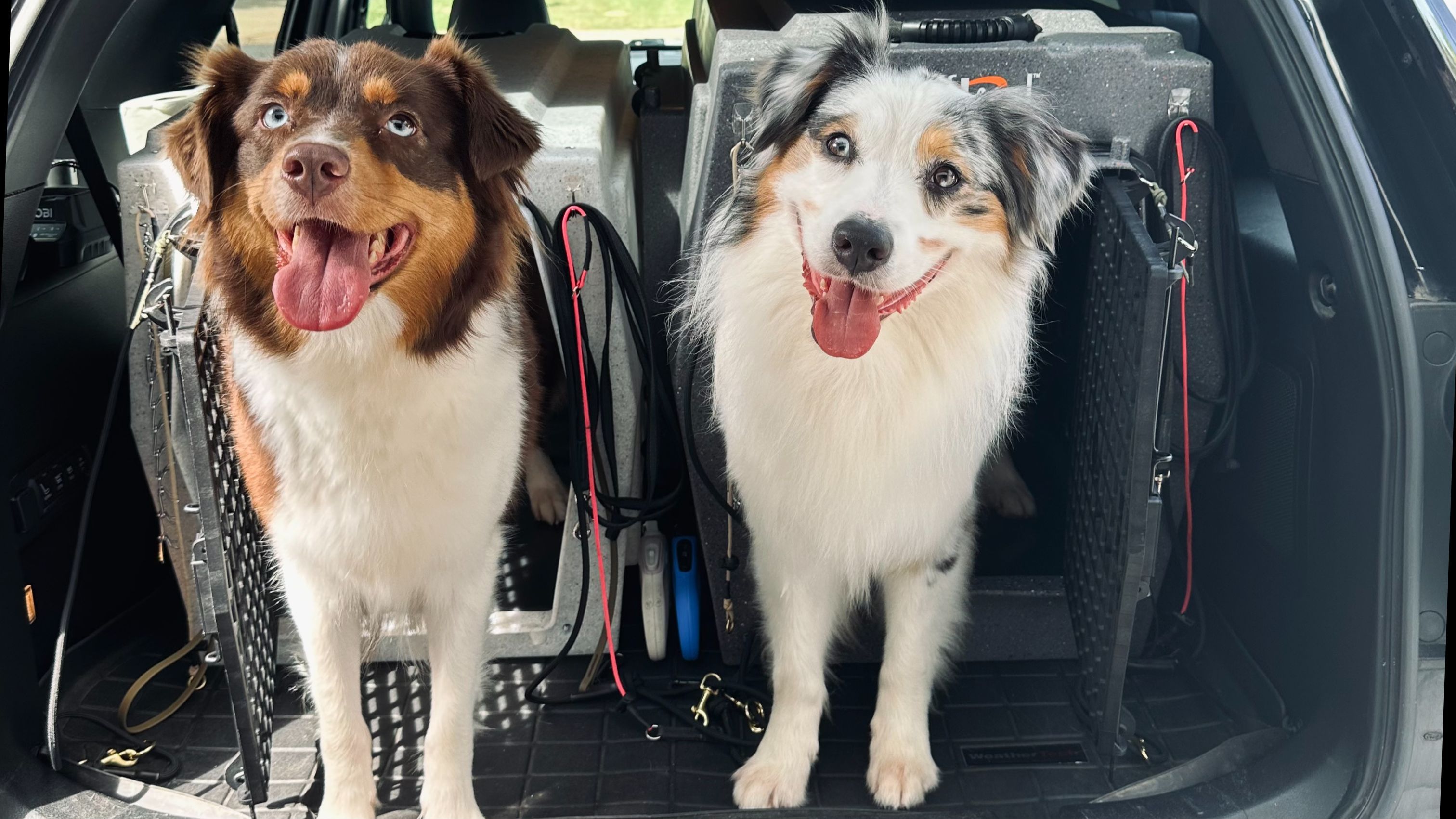
If your dog barks in the car, refuses to jump in, paces the entire ride, or seems overwhelmed every time you drive somewhere, you're not alone. Anxiety in the car is one of the most common struggles we see with dogs, and fortunately, it's something that can be improved with the right understanding and training.
Many people assume their dog simply "hates the car," but the behavior is often the result of fear, overstimulation, frustration, or learned habits; not stubbornness.
Let's dive into why it happens and what you can do about it.
Why Dogs Experience Anxiety in the Car
Unlike humans, dogs experience the world very differently.
Dogs rely heavily on contrast and movement to understand what's happening around them. A squirrel darting across the road, someone walking down the sidewalk, or another dog across the street immediately grabs their attention, often long before we even notice it ourselves.
Strong visual contrast helps dogs separate important information from background noise. While this is incredibly useful in nature, it can become overwhelming inside a moving vehicle.
As your car drives through neighborhoods, highways, or busy intersections, your dog is processing:
- Cars passing in every direction
- People walking
- Dogs on sidewalks
- Bikes, runners, wildlife
- Changing shadows and reflections
- Constant movement outside every window
For dogs with a sensitive or over-aroused nervous system, this endless stream of visual information can quickly become exhausting. Instead of relaxing, they begin scanning the environment, struggling to focus, and reacting to everything they see.
Why Your Dog Barks in the Car
One of the biggest reasons a dog barks in the car is something called barrier frustration (also known as barrier reactivity).
You may have seen this same behavior at home. Your dog stands behind a fence or looks out the front window barking, lunging, growling, or jumping at people and dogs as they walk by.
While this can look like aggression, it often isn't.
Barrier frustration occurs when your dog can see something they want to investigate, greet, chase, or avoid, but a physical barrier prevents them from doing so.
When driving, the car window becomes the barrier.
Your dog may react to:
- Passing dogs
- People walking
- Cyclists
- Wildlife
- Other vehicles
- Strange noises
- Even something blowing in the wind
Although the behavior appears aggressive, the underlying emotions are often:
- Fear
- Excitement
- Stress
- Anxiety
- Frustration
- Over-arousal
The important thing to remember is that your dog is practicing this behavior every single time they react.
Dogs learn through repetition.
Every barking episode strengthens the habit, making it more likely to happen again during the next car ride.
Why Simply Saying "No" Doesn't Work
Many owners respond by repeatedly saying:
- "No."
- "Stop!"
- "Quiet."
The problem is that while you're asking your dog to stop barking, you haven't actually addressed what's causing the behavior.
Your dog still sees the trigger.
Their emotions haven't changed.
Their nervous system is still overwhelmed.
Instead of changing the behavior, you often end up in a barking contest with your dog that leaves everyone frustrated and doesn't create lasting change.
Successful training focuses on preventing rehearsal of the unwanted behavior while teaching your dog how to stay calm instead.
The Best Way to Manage Dog Anxiety in the Car
One of the easiest, safest, and most effective solutions is to use a travel crate.
A properly sized crate helps by:
- Limiting your dog's visual field so they aren't constantly scanning every window.
- Reducing opportunities for barrier frustration.
- Creating a calm, predictable space.
- Preventing dangerous behaviors like pacing, climbing into the front seat, or jumping onto the driver.
- If your dog already feels stressed about confinement, start by making the crate a positive place before expecting them to relax in it during car rides.
Many owners are surprised how quickly their dog's car behavior improves simply because they can no longer rehearse barking at every passing distraction.
If you're looking for a safe travel crate, check out our guide to the Best Dog Crates to find options that work well for vehicle travel.
My Dog Won't Ride in the Car (or Won't Jump In)
Another common concern we hear is: "My dog won't ride in the car."
More specifically, many owners mean their dog won't jump into the car.
The first instinct is to pick the dog up and put them in the car.
While this may seem helpful, it actually prevents your dog from learning the confidence and skill of getting in independently.
In most cases, your dog is physically capable of making the jump, they simply lack confidence or don't fully understand what you're asking.
Instead, try this approach:
1. Make Yourself the Target
Rather than standing outside and pulling on the leash, climb into the vehicle yourself.
Dogs naturally want to move toward us, making you a much easier target to follow.
This works especially well if you're sitting in the backseat or have the rear seats folded down so you can sit in the cargo area.
2. Keep the Leash Attached
Use gentle leash guidance if needed, but avoid dragging or forcing your dog.
Allow them to think through the problem while encouraging forward movement.
3. Reward Every Success
The moment your dog jumps in, celebrate!
Use enthusiastic praise, treats, toys, or whatever motivates your dog most.
The goal is to build a positive emotional association with getting into the car.
4. Use a Step if Needed
If your dog lacks confidence, start with a sturdy platform or large box to make the jump easier.
Practice hopping on and off until your dog understands the game.
Gradually remove the box as they become more comfortable.
5. Add the Travel Crate
Once your dog is confidently jumping into the vehicle, introduce their travel crate.
Now they're simply jumping into the car to enter their familiar, secure space.
This often makes travel much less stressful.
Set Your Dog Up for Success
Remember - dogs are learning during every single experience.
If every car ride includes frantic barking, lunging, or reacting out the window, those behaviors will become stronger over time.
Instead of waiting for unwanted behaviors to happen, focus on preventing them.
Management isn't avoiding problem areas; confronting weaknesses and challenges head-on is an important part of training.
By reducing your dog's exposure to overwhelming visual stimulation, preventing barrier frustration, and creating positive experiences getting into the car, you'll help your dog develop calmer travel habits that last.
With consistency, patience, and the right setup, many dogs that once dreaded car rides can learn to relax and even enjoy the journey.
Need Help with Your Dog's Car Anxiety?
If your dog struggles with anxiety in the car, refuses to go for a ride, or barks incessantly while driving, our trainers here at KeenDog, a provider of dog training in Charlotte and Fort Mill, can help.
Through balanced training, confidence building, and practical management strategies, we'll help your dog learn to stay calm, relaxed, and safe, whether you're driving across town or heading out on your next adventure.
ABOUT THE AUTHORS